Pay for administrators

September 2026

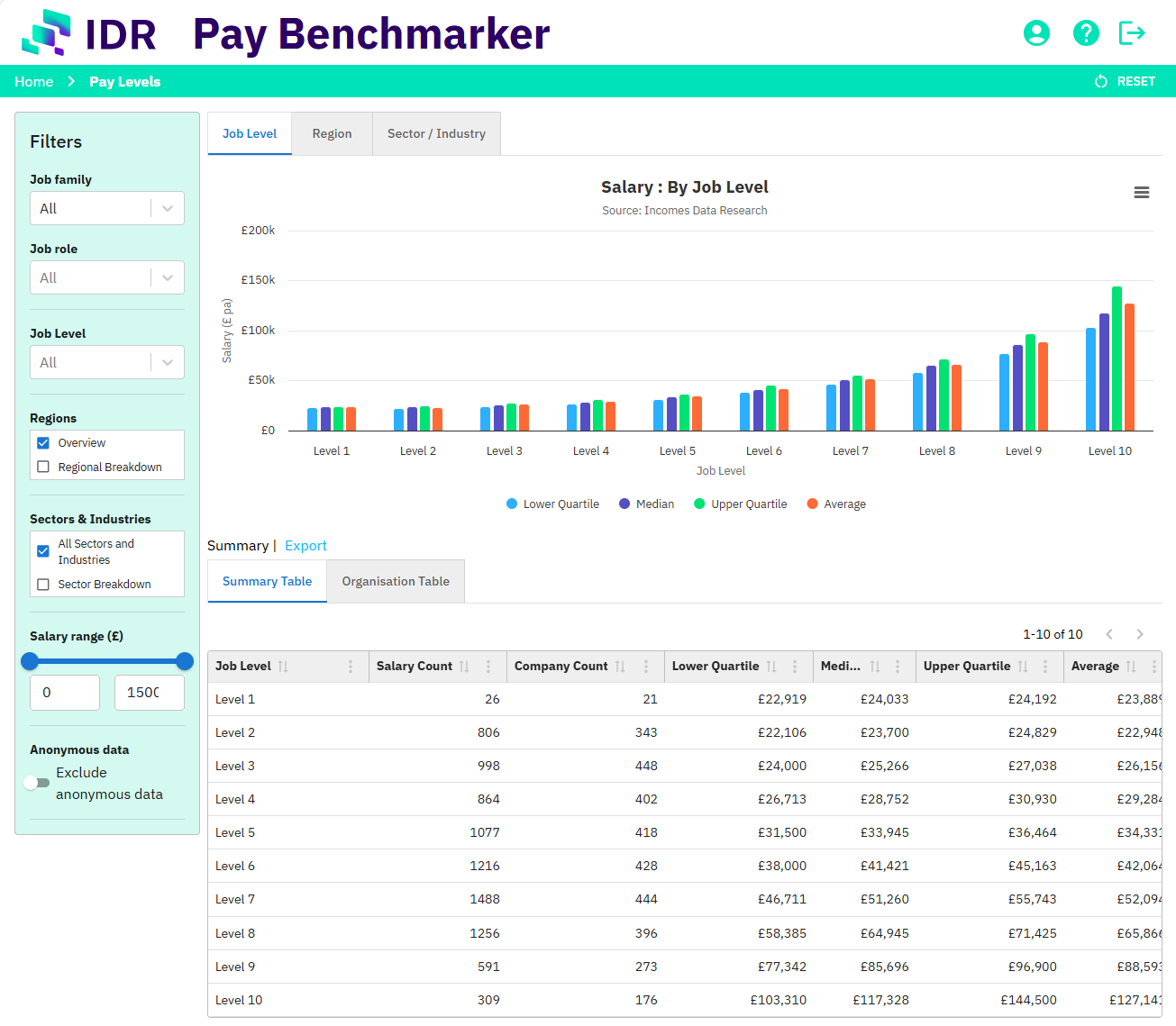
While AI is gradually enabling businesses to automate routine processes, administrative staff are nonetheless still key to the smooth running of organisations of virtually all sizes. Responsibilities for such roles can be wide-ranging; however, at IDR Job Level 3 (Administrative Assistant), they typically entail general clerical support duties such as handling telephone enquiries; ensuring consistency of processes and record keeping; organising meetings; and maintaining databases. The latest snapshot from IDR’s salary benchmarking tool, Pay Benchmarker, which contains salary data for 50 such roles, shows that the median annual salary for administrative assistants is currently £26,354, while the average or mean is similar at £26,337.

Typical tasks for administrative officers at a slightly higher level (those classified as a Level 4 in IDR’s Job Level framework) are likewise varied but might include servicing and preparing papers for meetings; ensuring processes and record-keeping are consistent; monitoring budgets; and dealing with straightforward enquiries. At this level, administrative officers may also supervise or train junior staff. The median annual salary for Level 4 administrative officers, based on a sample of 45 salaries, is currently showing at £28,914 in Pay Benchmarker, while the average is slightly higher at £28,996.

The Pay Benchmarker database also includes data for administrative officers with more extensive supervisory duties, who typically also participate in recruitment and other aspects of staff management. The median salary for such administrative roles, at IDR Job Level 5 and based on a more modest sample of 16 salary points, is £34,010 (£33,525 on average).   

There is little regional variation in salaries for administrative roles and at IDR Job Level 3, salaries are broadly in line with the whole economy median regardless of sector. At Level 4, meanwhile, administrator salaries in private services are markedly below typical levels across the wider economy (to the tune of £1,264 or 4.4%). At this level, the highest salaries are on offer in the not-for-profit sector. 

Why salary benchmarking is essential in 2026

September 2026

The labour market could be characterised as slowly slackening overall, but it is running at different speeds in different areas.

Pay benchmarking is used to obtain a view of the market salary for a job or job levels. Such exercises can be used for recruitment to new roles, promotions or changes to roles, as an aid to retention, as part of planning ahead for a salary review, or as a guide in the development of salary ranges. We have a great online tool to help with this – IDR Pay Benchmarker.

Benefits of benchmarking

• Employers gain a better insight into the job market so roles can be remunerated at the right level, attracting the right candidates

• Increases staff retention as you can match the market, discouraging staff from looking elsewhere

• Compare your pay and reward package to different industries/sectors

• With recent steep rises in the cost of living, pay awards are increasing and you can stay aware of the market rate

• Supports the budgeting process with guideline salaries for when you are looking to recruit new staff. The value of internal benchmarking should not be overlooked either: while benchmarking against the external market is important, maintaining internal equities and fairness is also a key consideration. 

The value of internal benchmarking should not be overlooked either: while benchmarking against the external market is important, maintaining internal equities and fairness is also a key consideration. Organisations that do not routinely benchmark their pay and reward packages may be on the back foot when it comes to staying competitive in the labour market. 

Pay Benchmarker - what does it provide?

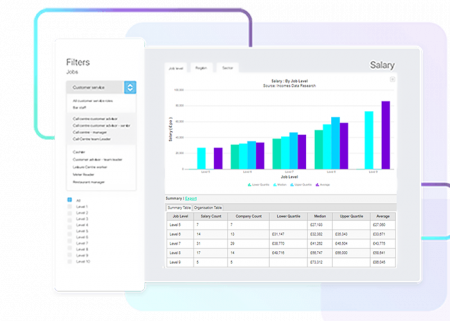
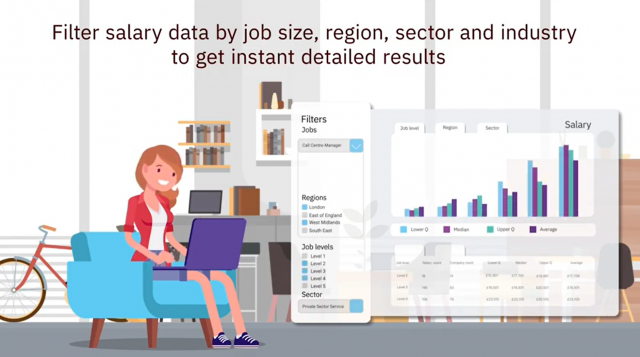
Pay Benchmarker is an impressive online tool which gives you access to up-to-date, searchable market data on pay levels, pay awards and executive compensation. The database contains details of 800 pay awards per year as well as 10,000 salary records covering 200 jobs from 900 companies, most of which are named. This can be interrogated by region, sector and size and can be viewed and exported from anywhere. 

For more information on Pay Benchmarker or to get in touch about a free trial, you can click on the relevant buttons below. Alternatively, to speak to a member of the IDR team about subscribing, email sales@incomesdataresearch.com or call +44(0)1702 669549.

Pay for project managers

September 2025

Adapting to change is an important organisational attribute. Employing staff to manage projects that enable a business to plan and implement change can be key to its success. And making sure that project managers are paid in line with market benchmarks is vital for recruitment, retention and motivation of such staff.

Project manager roles exist across all parts of the economy and the current salary data held in our online pay benchmarking tool, Pay Benchmarker, shows that the current median basic salary for these positions is £54,538. Some projects require specialist management or developed experience to deliver multiple and/or high-profile projects with significant budgets. A salary check against the information we have collected for these senior project manager positions shows that basic pay is typically £67,500 per year.

Project managers are categorised in our pay Benchmarker tool as professional and managerial, matching to either IDR job level 7 or 8.  Roles at level 7 generally require experience and/or qualifications in order to provide expertise, with roles at level 8 requiring these attributes at a higher level and often responsible for managing a team.

Pay for software developers

September 2025

Software developers research, design, build and implement software systems and solutions using a variety of computer programming languages and applications. They play an important role in many areas of the economy. Our 2025 survey highlights how experienced software developers, alongside other IT roles, are very much in demand. Experienced or senior software developers are normally tasked with mentoring junior colleagues in the design, development, implementation, maintenance, optimisation and troubleshooting of software programs and applications.

Knowledge of current typical pay levels, via access to salary benchmarking data, can help employers stay abreast of market rates and remain competitive in this fast-moving area of the labour market.

The latest snapshot from IDR’s salary benchmarking tool, Pay Benchmarker, shows that the median annual salary for software developers is currently £51,703, while the average or mean is similar at £52,469. The median for senior software developers indicates a significant lead on the basic role, at £65,814, and the mean is even higher at £69,889 (see table below). The greater gap between the median and the mean for senior roles indicates that the distribution here is skewed towards the higher end, mainly as a result of the tighter labour market for more experienced practitioners.

The summary market data is based on information from 32 organisations in the case of level 7 roles and 27 in the case of roles at level 8. Contributors include Boots, Capita, Cancer Research, Jacobs, Imerys, Lloyds Banking Group, LV=, the Met Office, National Crime Agency, National Grid and Rentokil.


Pay data for these roles is found in the ‘professional and managerial’ category of the IDR Pay Benchmark service. Software developers are assigned to IDR job level 7, defined as work ‘concerned with the provision of professional services and [requiring] an experienced and qualified professional to provide expertise and advice and operate independently.’ Senior software developers are at IDR job level 8, where the work involved ‘requires deep professional experience and qualifications in a specific discipline to be able to carry out a range of specialist technical or scientific activities, which may include the management of a team or services.’

Pay Benchmarker

IDR's online pay benchmarking tool, Pay Benchmarker will help you to ensure you are paying the right level of salary necessary to recruit, retain and motivate staff in your sector and region. It brings together all of the data collected by IDR with user-friendly functionality.

Pay Benchmarker packages

Plans and pricing vary according to the level of access required, our standard Pay Benchmarker subscription gives access to salary levels and pay awards.

Pay Benchmarker

For benchmarking salary levels and pay awards by in-house professionals

£1,508 + vat per annum

  • Access to salary levels and pay awards databases
  • Filter by job role, region, job seniority and sector
  • Export bespoke charts and data tables
  • Three logins + optional additional users

Pay Climate + Pay Benchmarker

Take both services together and receive a 50% discount on the Pay Climate subscription

£1,900 + vat per annum

  • Access to the data behind the commentary
  • Filter by job role, region, job seniority and sector
  • Make informed decisions on pay
  • Reliable access to data 24/7

To speak to a member of the IDR team about subscribing email sales@incomesdataresearch.com or call +44(0)1702 669549

Stay informed

Enter your details here to join our mailing list and be alerted when we release open articles, events and research.

By submitting this form you agree to the terms of our privacy policy.

Thank you for signing up to our mailing list

We will be in touch soon.