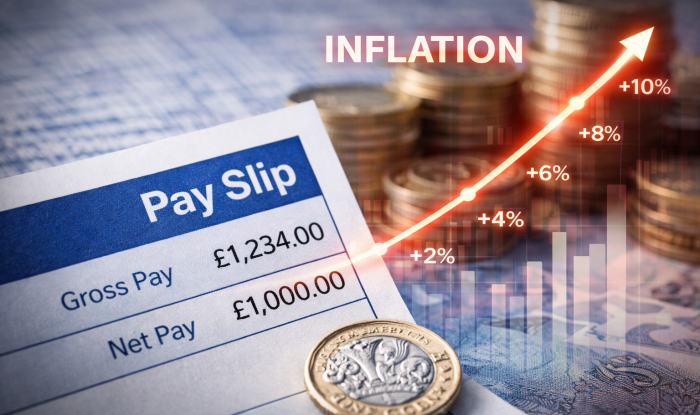
As 2026 begins, the median pay increase is below inflation. This is in line with the usual dominant trend. Normally, as inflation rises, so too does the average level of pay increases, after a short delay that reflects the time needed for decision-makers and negotiators to process the information about price hikes. But the average or median pay award rarely, if ever, reaches the same level as consumer price rises. Then later, as inflation falls back, so too do pay awards, again usually with a time lag, though this is something that can be elongated by the persistence of cost-of-living pressures, even if inflation – the rate of increase in prices – itself has fallen.
The chart below illustrates how the IDR median pay rise has compared to the different measures of inflation over the past 20 years. Prior to the global financial crisis of 2009, the relationship was precisely as that described above. When inflation rose (a little), wage rises followed it upwards though never quite matched it.
But in the decade following the global financial crisis, economic and labour market weakness undermined the dominant trend. During these years, the median basic pay award was more or less stuck between 2 and 2½%, notwithstanding minor fluctuations in inflation. This was the period when pay rather than jobs bore the brunt of post-recession economic restructuring (unemployment rose a little but by nowhere near as much as economists thought it might). For ten years or so, until the coronavirus pandemic, employers used their control over pay, for example via all-merit budgets, to squeeze basic pay rises lower.
After the health crisis, however, inflation rose to unprecedented levels in the wake of supply difficulties and the impact of war on utility prices. As a result, the ‘normal’ relationship between inflation and pay resumed. (The post-pandemic labour market, which was much tighter than that before the spread of the coronavirus, was also a factor.) Our median peaked at 6.0% in early 2023, when inflation was averaging around 9%, depending on the estimate used.
Today, now that inflation is lower, pay rises have – eventually – come down. They remained ahead of inflation in 2024 because pay rises in that year, as in every year, mostly reflected decisions made a year earlier, when of course inflation was much higher.